A Color Analysis Result Is Not a Foundation Shade Match
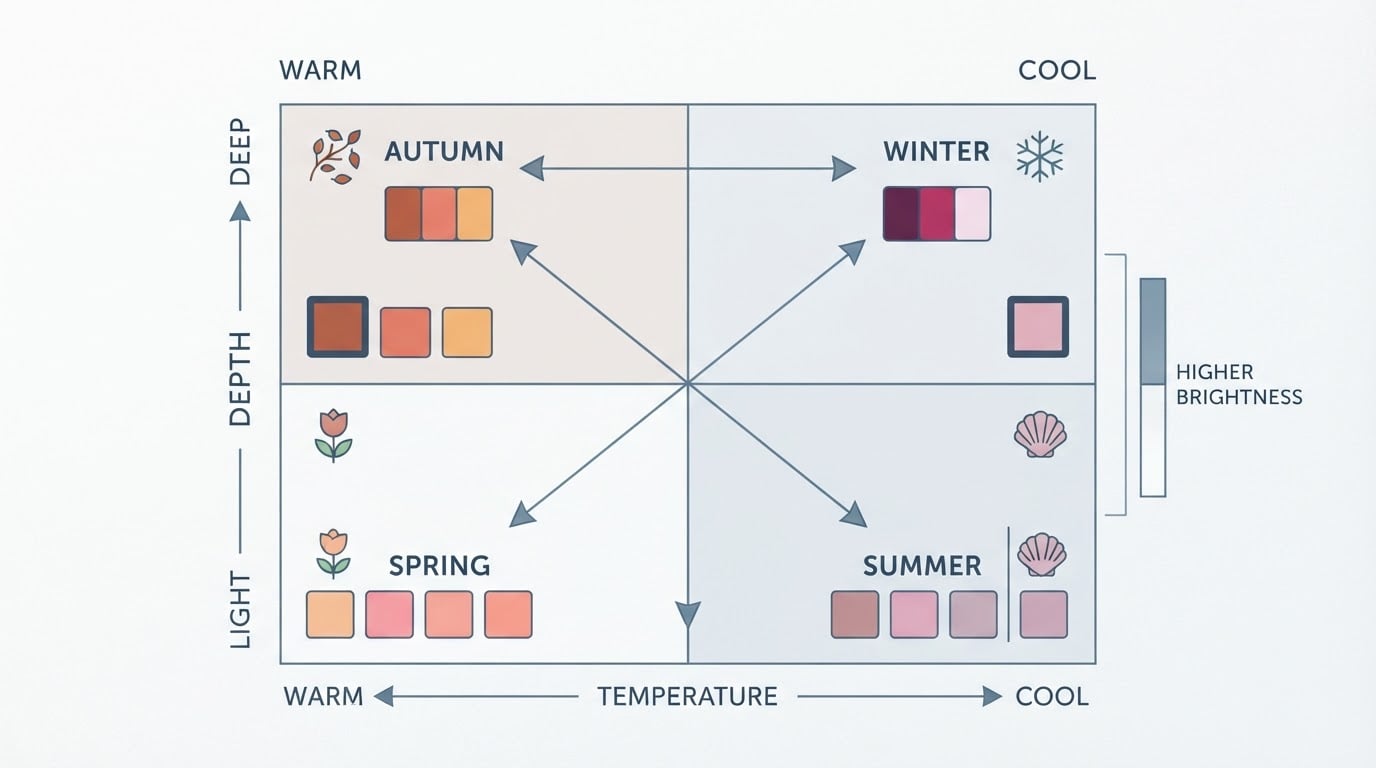
Seasonal color analysis and foundation matching are related, but they answer different questions. Color analysis classifies your coloring across three professional pillars — undertone (warm versus cool), value (light versus deep) and chroma (muted versus bright) — and places you in a season such as Soft Summer or Deep Autumn. A foundation shade belongs to one brand's system: ranges are usually sorted by depth first, then labeled by undertone, and every formula can carry its own numbering.
Those systems do not translate cleanly into each other. Clinique's foundation guidance points out that shade names are not universal — "Espresso" or "Beige" in one brand does not describe the same color in another, and the same name can look slightly different in a liquid, a powder and a cream. A season result can organize what you already observe about your undertone. It cannot hand you a product code on its own.
What a Self-Reported Color Quiz Can Contribute
A self-reported color quiz is the no-photo option: it asks about your veins, your jewelry preferences and how your skin reacts to the sun, then returns an undertone family or a full season from your answers. It takes minutes, needs no image, and works in whatever light you happen to be in, which makes it a comfortable first step.
Its limits come from the same place as its convenience. The quiz reads your self-description, and self-description is often the least reliable evidence available. Vein color is genuinely difficult to judge, especially on deeper skin; questions rarely capture neutral or olive undertones well; and two quizzes can disagree because they weight different questions. Use the result as a starting hypothesis, write down the undertone family it suggests, and hold it lightly until a swatch confirms or corrects it.
What a Photo Upload Adds, and What Can Distort It
Photo-based analysis measures the image instead of the description. A careful tool selects skin pixels, converts them to a color space such as CIELAB, and derives depth from lightness and undertone from hue angle — which helps exactly where self-reporting is weakest, including neutral and olive undertones that questions tend to squeeze into two or three boxes. A careful photo tool documents its lighting correction, its skin-pixel measurement and a confidence score alongside the season it returns.
What a photo contributes depends heavily on the photo. A warm indoor bulb pushes everything golden and can make cool skin read warm; camera white balance and processing shift colors; foundation, blush or yesterday's tan changes what the tool measures as skin. That is why photo tools ask for daylight near a window, a bare face, hair pulled back and a plain background — and why a careful tool flags a low-confidence reading instead of guessing when the light was poor.
Photo Upload vs. Quiz: Inputs, Strengths and Limits
What matters | Self-reported color quiz | Photo upload analysis |
|---|---|---|
What you provide | Answers about veins, jewelry and sun reaction | A current, bare-faced photo taken in daylight |
What it reads | Your self-description | Skin pixels: depth and undertone |
Strengths | No photo needed; fast; works in any light | No self-judgment; picks up subtle, neutral and olive undertones |
Watch out for | Ambiguous questions; forced choices; quizzes disagree | Lighting, camera processing, makeup and photo age shift the result |
Neither method deserves blanket trust or blanket dismissal, so choose by situation. If you would rather not upload a photo, a quiz is a fine place to start. If your undertone tests keep landing on not-quite-either, a photo reading adds a second, measurement-based opinion. If both agree, you have a direction; if they disagree, that is a signal to slow down and swatch, not a reason to trust whichever answer you liked better.
Turn an Undertone Result Into a Foundation Shortlist
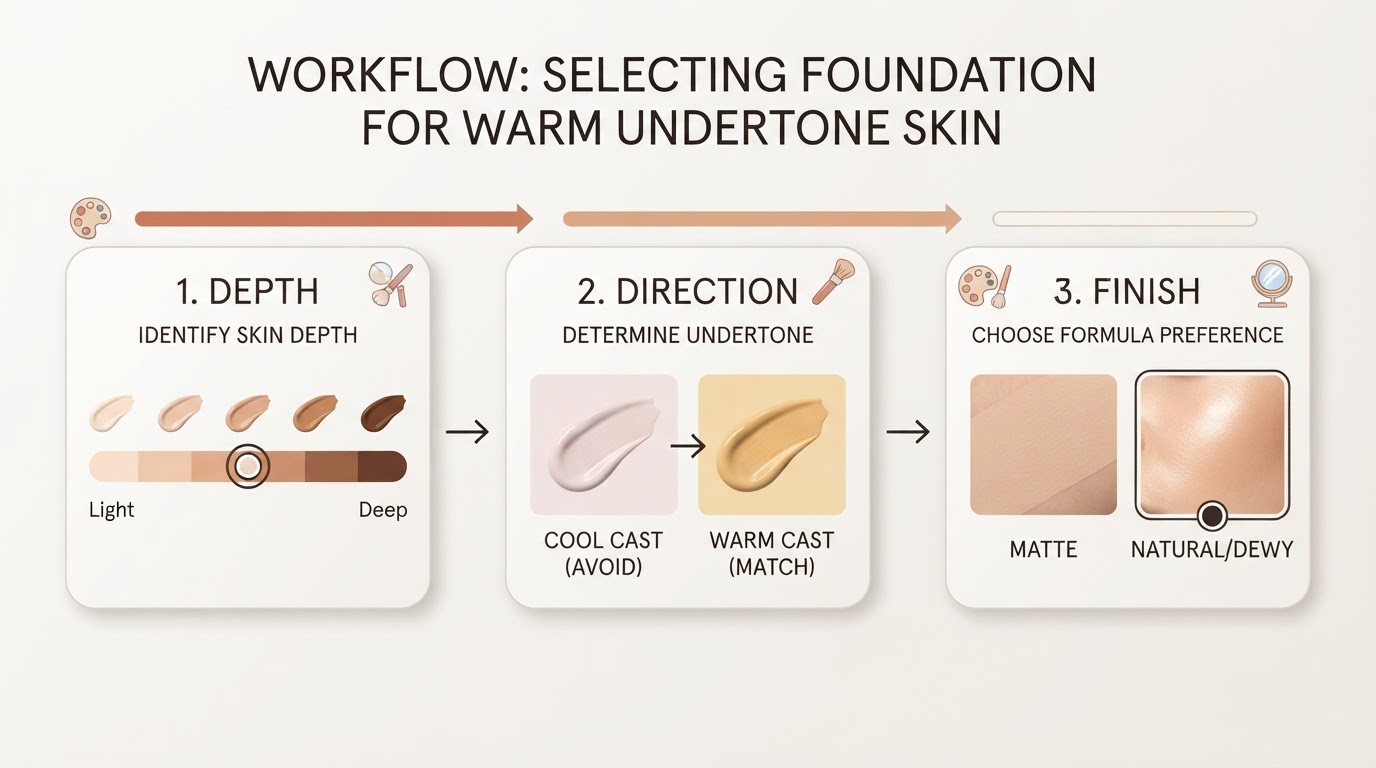
Once you have a direction, learn the brand's shade language before you swatch. Many ranges pair a depth step with an undertone qualifier — words or letters such as warm, neutral and cool, the way Clinique uses WN and CN for Warm Neutral and Cool Neutral. Write your depth in plain words (light, medium or deep) next to the undertone family you were given, then pick two or three candidates at that depth: one from the suggested family, one neutral if the range has one, and one neighbor close enough to test the boundary.
Keep the shortlist provisional. Depth steps do not transfer between brands, so a medium in one line can sit lighter or deeper than a medium in another. What you are really doing is narrowing a long shade wall down to three stripes that deserve the swatch test.
Verify Depth and Undertone With Swatches, Samples and Consistent Lighting
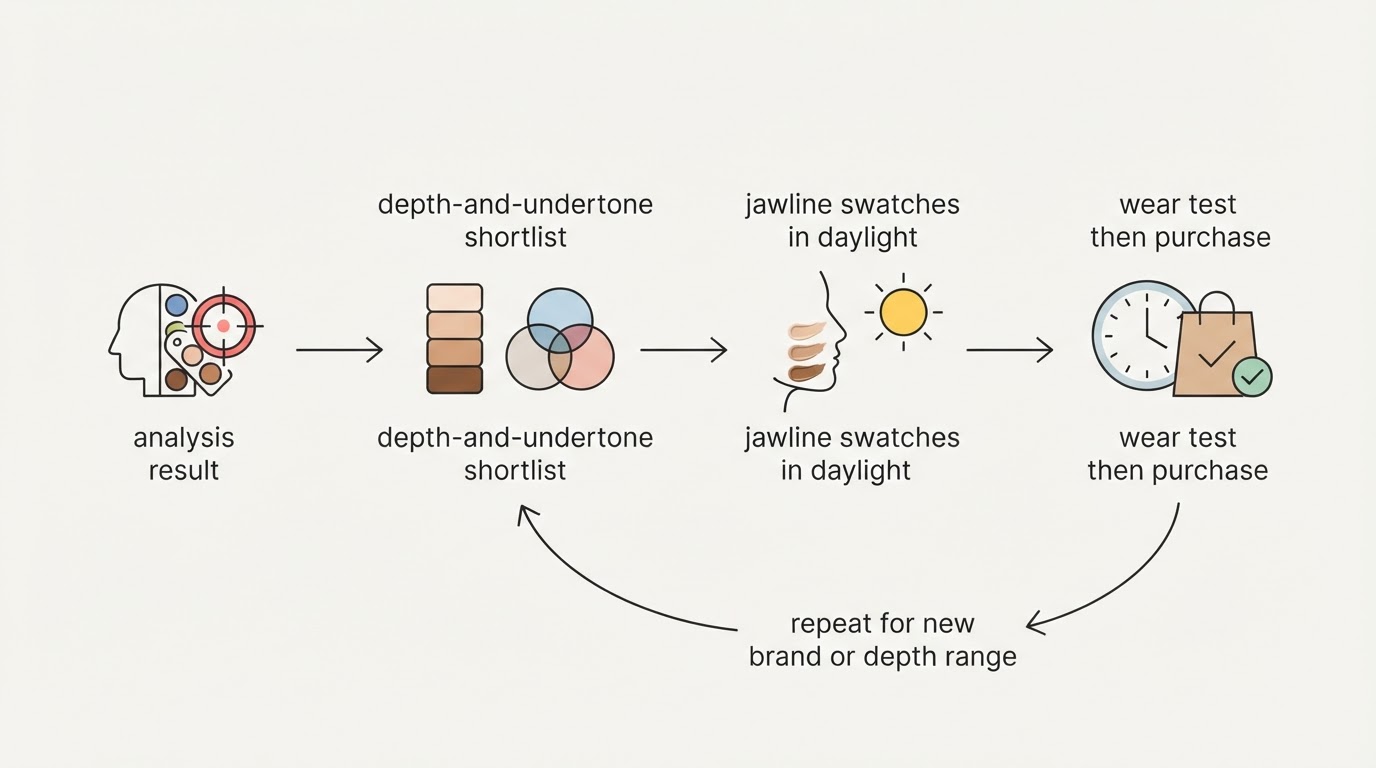
The swatch test confirms depth and undertone together, and it works the same way across fair, medium, tan and deep skin, because the arm and the face often differ. The core routine described by professional foundation guides is consistent:
- Start bare-faced and clean, with any current foundation removed.
- Choose two or three close candidates at your depth.
- Apply thin stripes side by side on your clean jawline — not your hand or wrist — leaving a little skin between them.
- Judge them in natural daylight near a window or outside, because indoor bulbs change how every shade reads.
- Let the swatches dry and settle for a few minutes before deciding.
- Blend the front-runner down your jaw toward your neck; the right shade disappears where it matches.
- Wear it for an afternoon, or ask for a sample to take home, before buying the full bottle.
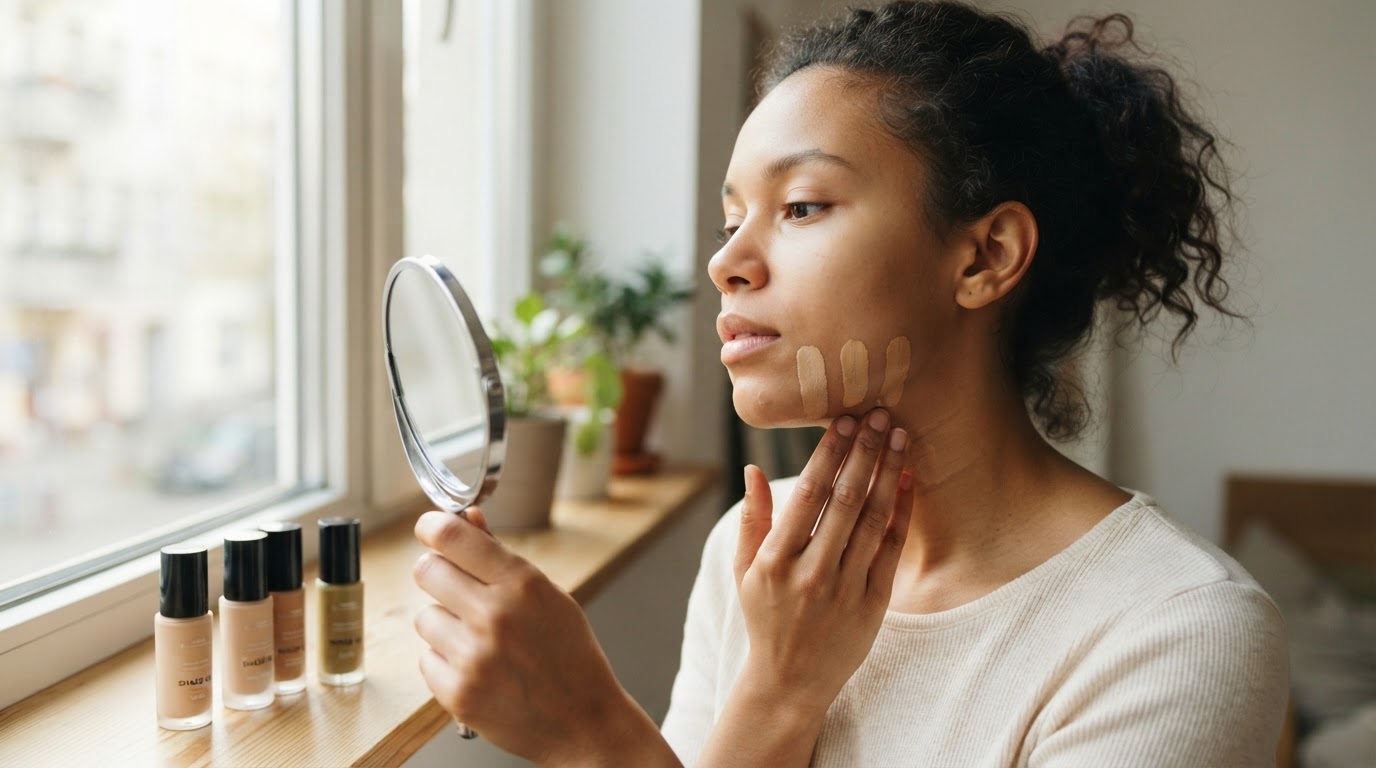
If a range does not include your depth at all, note that and move to another line instead of forcing the undertone. A too-light shade with the right undertone is still a wrong match.
When Quiz, Photo and In-Person Observations Disagree
Disagreement is normal, because each method reads different evidence. Retake the photo in daylight with a bare face. Re-read the quiz questions you guessed on and answer them honestly. If warm versus cool stays genuinely unclear, test a neutral shade at your depth instead of forcing a side. Check whether your skin has changed since the photo: a tan, seasonal dryness or a new routine all shift readings. Then weigh repeatable observations over single ones.
Two methods pointing the same direction is a strong signal. One outlier is usually bad input — a dim photo or a guessed answer — rather than proof that the other two are wrong. If you sit near an undertone or season boundary, expect some disagreement to persist and let the swatch test be the tiebreaker.
A Foundation-Shopping Checklist and Your Next Step
Run this list every time you shop a new brand, formula or depth range:
- Run one free analysis — quiz or photo — and write down the undertone family it suggests
- Note your depth in plain words so brand systems cannot confuse it
- Build a shortlist of two or three shades, including a neutral if you are torn
- Swatch the shortlist on a clean jawline in natural daylight and let the stripes settle
- Check the blend down to your neck before you commit
- Wear-test or take home a sample before buying the full bottle
- Re-check when your skin changes with the season, a tan or a new routine
Disclosure: this guide is published by the team behind Tone & Fit, which offers a free photo-based color analysis tool and app.
For the analysis step, Tone & Fit's free color analysis tool reads your undertone and depth from one photo, returns your closest season with a confidence score and five starter colors, and asks for no account. Run it as a first read, then let the checklist above decide whether the result survives contact with a real swatch.
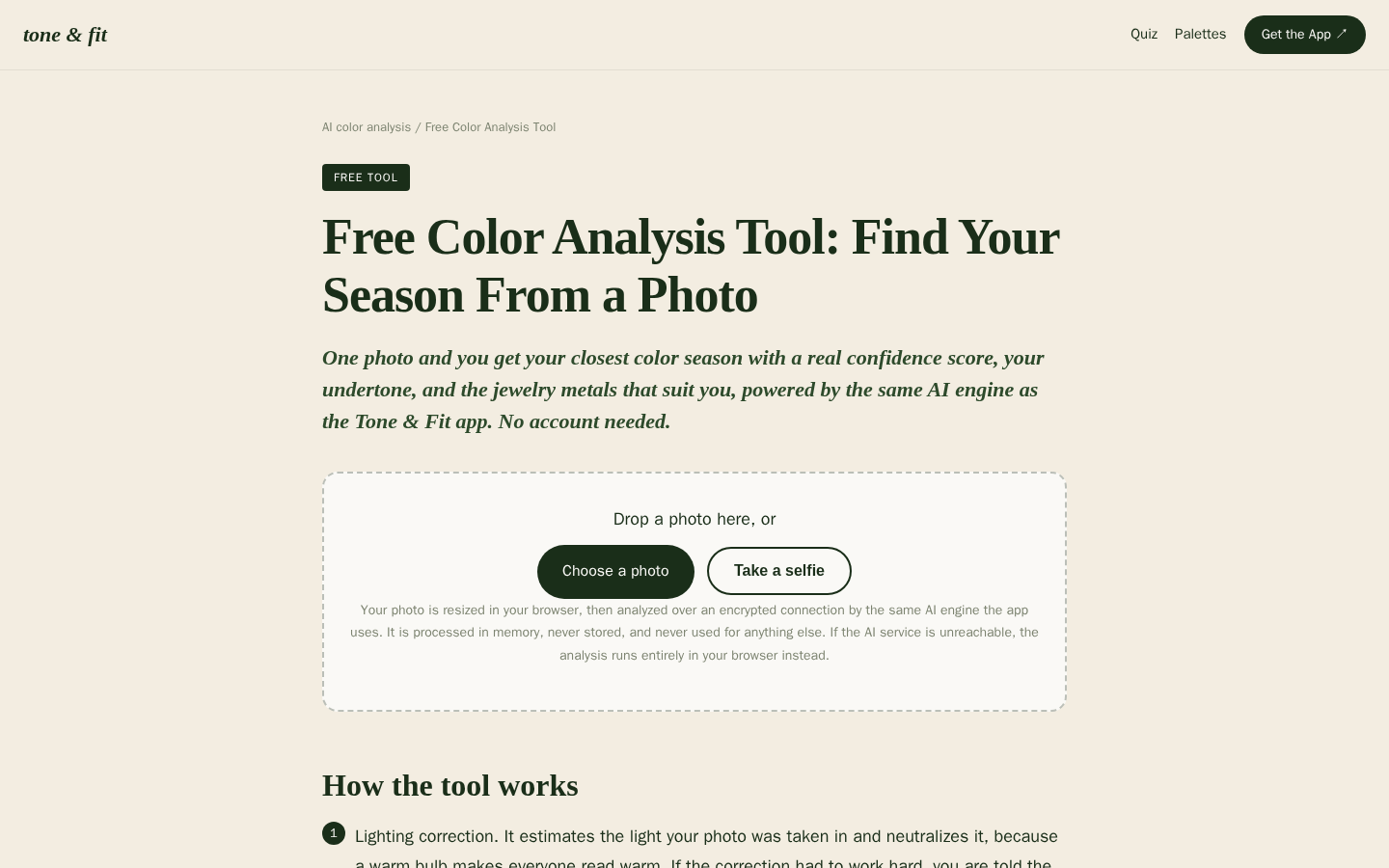
Desktop first-screen of the free web-based color analysis tool with photo upload drop zone, how-it-works steps, and privacy notes
If you would rather keep the analysis on your phone, the Tone & Fit app adds unlimited re-scans, so you can compare how the reading changes as your light, your tan or your routine changes. Either way, the shade that ends up on your jawline gets the final vote.