Why Warm Undertones Change the Whole Suit Equation
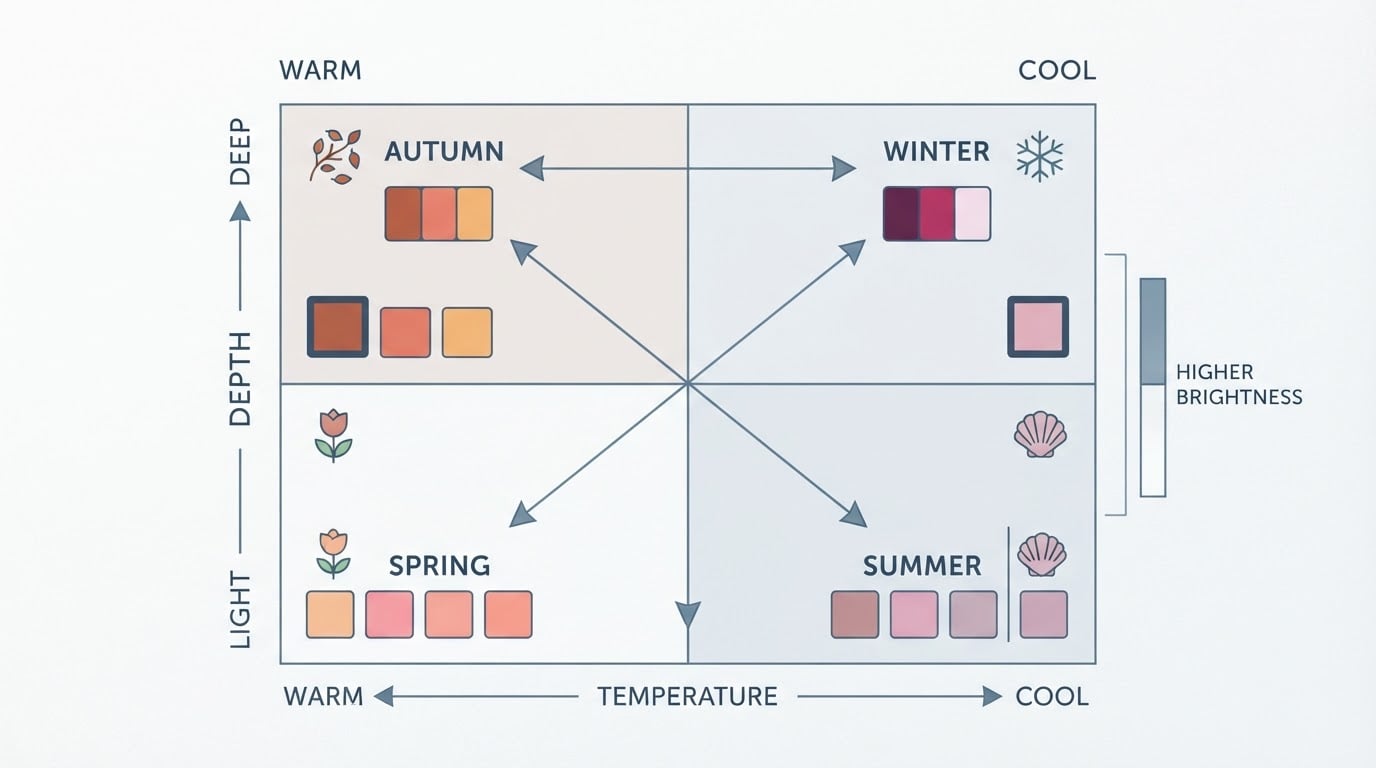
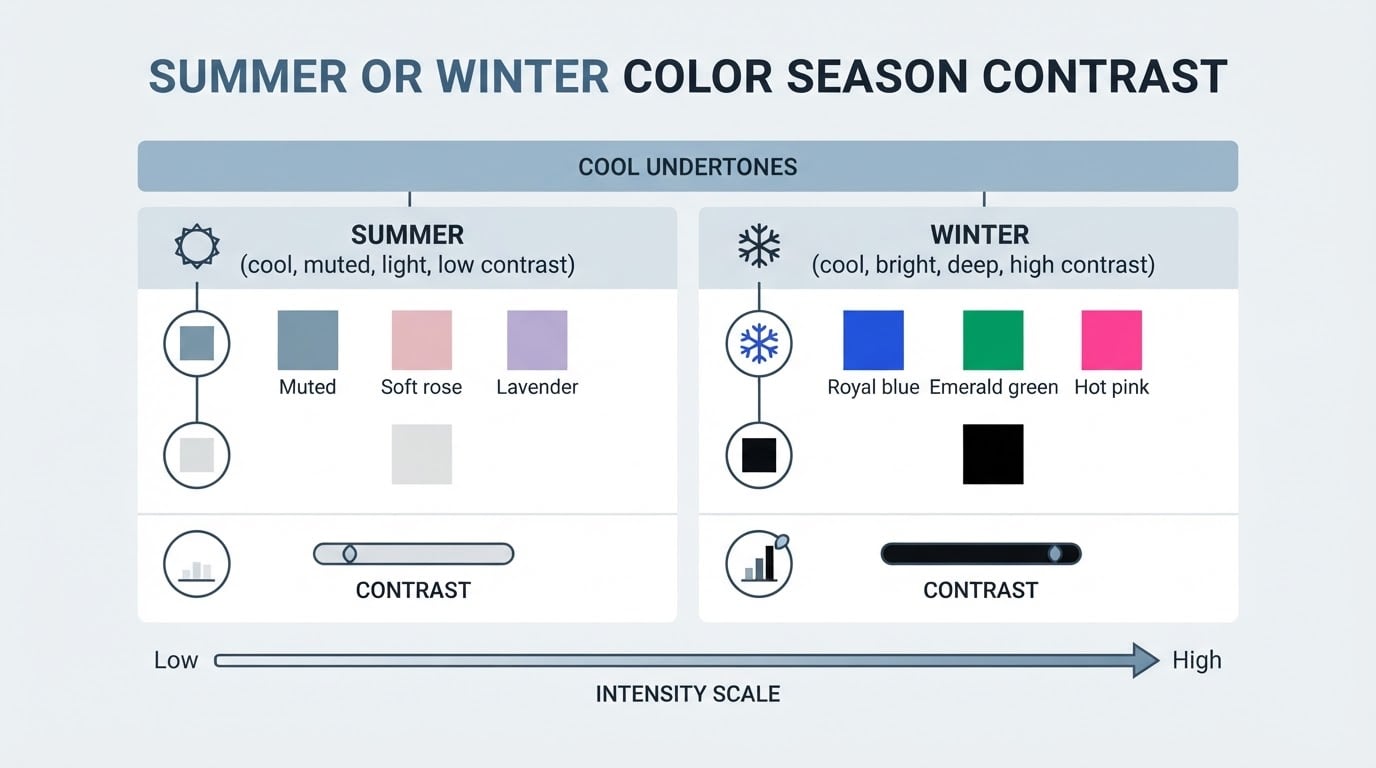
Color analysis sorts people by three variables. Undertone is the base cast in your skin, the gold, peach, or olive rather than the pink or blue. Value is how light or deep your coloring runs overall. Chroma is how muted or bright it reads. Combine the three and you land in one of the 12 seasons, and every season points to a family of shades that work with your face rather than against it.
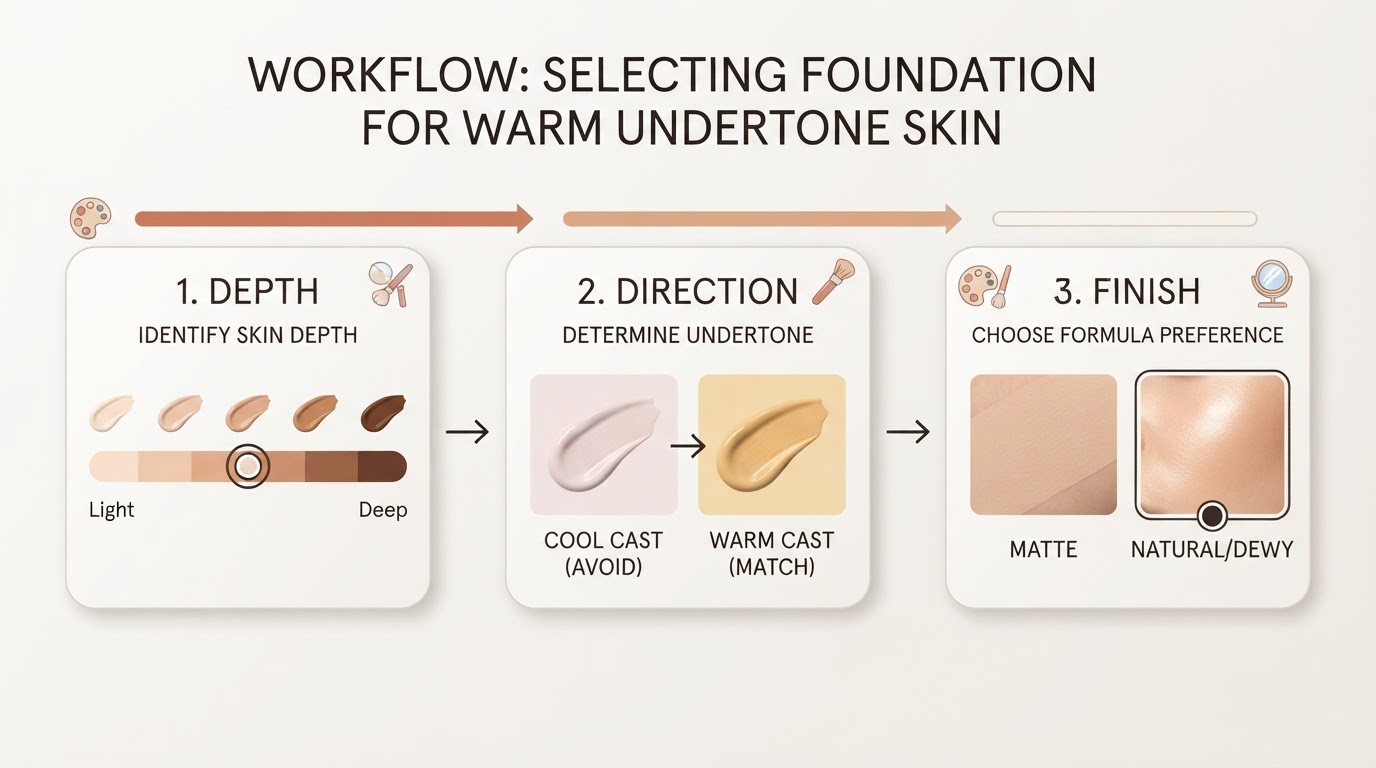
Warm undertones sit on the gold side of that map. A warm navy carries a green or teal cast. A warm grey leans taupe. A warm white is really cream. Put an icy blue next to a warm face and the skin can start to look sallow or flushed. Put bronze, olive, or camel next to the same face and the skin tends to look even and healthy. The fabric has not changed. The relationship between the fabric and your coloring has.
Distance matters as much as hue. Collar, lapel, shirt, tie, and beard all sit within a few inches of your face, so those are the surfaces to test first. Trousers, socks, and shoes sit far enough away that almost any neutral works.
The Best Suit Colors for Men With Warm Undertones
The short version: camel and sand, chocolate and espresso, olive and loden, warm navy and petrol, rust and copper, and cream or stone. Those six families cover the warm seasons from light and golden to deep and rich. The notes below explain what each one does and when to reach for it.
Camel, Sand, and Stone
Camel is the reference warm neutral. In a lighter cloth it reads relaxed, and in a heavier worsted it holds a semi-formal line without turning severe. Sand and stone are the quieter versions for trousers and summer suits. Pair them with a cream shirt and a brown tie and the whole outfit stays inside one warm family.
Chocolate and Espresso
If you want one warm suit that can do business and evening both, chocolate is the safest pick. It carries the weight of charcoal or black without the cool cast, and it flatters warm skin under indoor light, which is where most suits live. Espresso and dark cocoa go a step deeper for men with high-contrast coloring. Cream, sand, and ivory shirts keep the contrast clean.
Olive, Moss, and Loden
Olive brings a green base that sits naturally with gold skin tones. Deeper versions read almost like a neutral; brighter moss versions read casual. It is at its best in textured cloth such as tweed, corduroy, or a soft flannel, and it works especially well as separates. An olive jacket over chocolate trousers is a classic warm pairing.
Warm Navy and Petrol
Navy is not automatically cool. Compare two navy jackets side by side and you will usually see one leaning teal or green and one leaning purple or grey. Warm navy is the first kind, sometimes sold as petrol or teal navy. It is formal enough for business and it plays well with camel, brown, and cream, which is why it is the easiest warm blue to build a wardrobe around.
Rust, Copper, and Terracotta
Rust is the strongest warm statement in menswear and the easiest to overplay. Keep it to one piece, usually a blazer or a second suit, and let everything else stay quiet. Wool, flannel, and linen hold the color better than a shiny finish. Cream, chocolate, and olive are the safe partners.
Cream, Ecru, and Stone
For weddings, warm-weather events, and garden parties, a cream or ecru suit removes the harshness of pure white and lets warm skin stay in charge. Stone and pale taupe work the same way for separates. This family shows marks easily, so keep it to occasions where that does not matter.
Shirts, Ties, and Denim That Hold the Line
Suits are only half the frame. The pieces closest to your face decide whether the whole outfit reads warm, and the pieces furthest away decide how formal it feels.
Shirts
Cream, ecru, ivory, sand, and warm white are the reliable base. Sage, muted olive, and soft warm blue also work, especially in casual cloth. The main thing to avoid is an icy white or an icy blue collar sitting directly under a warm jaw, because that contrast tends to pull color out of the face.
Ties
Gold, bronze, rust, burgundy, olive, and brown cover most warm needs. Texture does a lot of the work here: a grenadine, a wool weave, or a matte silk reads warmer than a glossy finish. If the suit is already a strong warm color such as rust or copper, use a tie in the same family two shades apart rather than adding a second loud color.
Denim
Look for indigo with a green or brown cast rather than a purple one, and hold it against your face before you commit. Ecru, tan, and dark brown denim are easier warm options. Black denim is not forbidden, but chocolate and warm charcoal usually frame a warm face better.
Beard Color: The Menswear Detail Most Guides Skip
A beard rarely matches head hair exactly. It usually runs warmer, with red, gold, or copper threads showing up in what looks brown from a distance. That warmth is a useful clue to your undertone, and it also changes the contrast between your face and your collar.
If you color or shape your beard, keep the tone consistent with the warm cast rather than forcing an ashy or blue-black shade against the skin. A barber can help you judge the result in daylight, where the difference between a warm brown and a cool brown becomes obvious. The practical rule is simple: the beard, the shirt collar, and the tie should not fight one another in temperature.
Contrast and Formality: Wearing Warm Colors Without Looking Costumey
Two things keep a warm palette from looking like a costume. The first is contrast, and the second is formality.
Match contrast to your own coloring. If your hair, skin, and eyes sit close together in value, a dark suit with a bright white shirt can look like a cutout, while a cream shirt and a mid-tone tie keep the outfit in proportion. If your coloring is high contrast, a light shirt against a deep chocolate or warm navy suit gives you the separation your face already has.
Formality moves in the opposite direction to brightness. Camel, sand, olive, and cream read relaxed, so they suit daytime events, travel, and creative offices. Chocolate, espresso, and warm navy carry more weight and fit business, evening, and formal events. Rust sits in the middle and works best as a statement piece rather than a base.
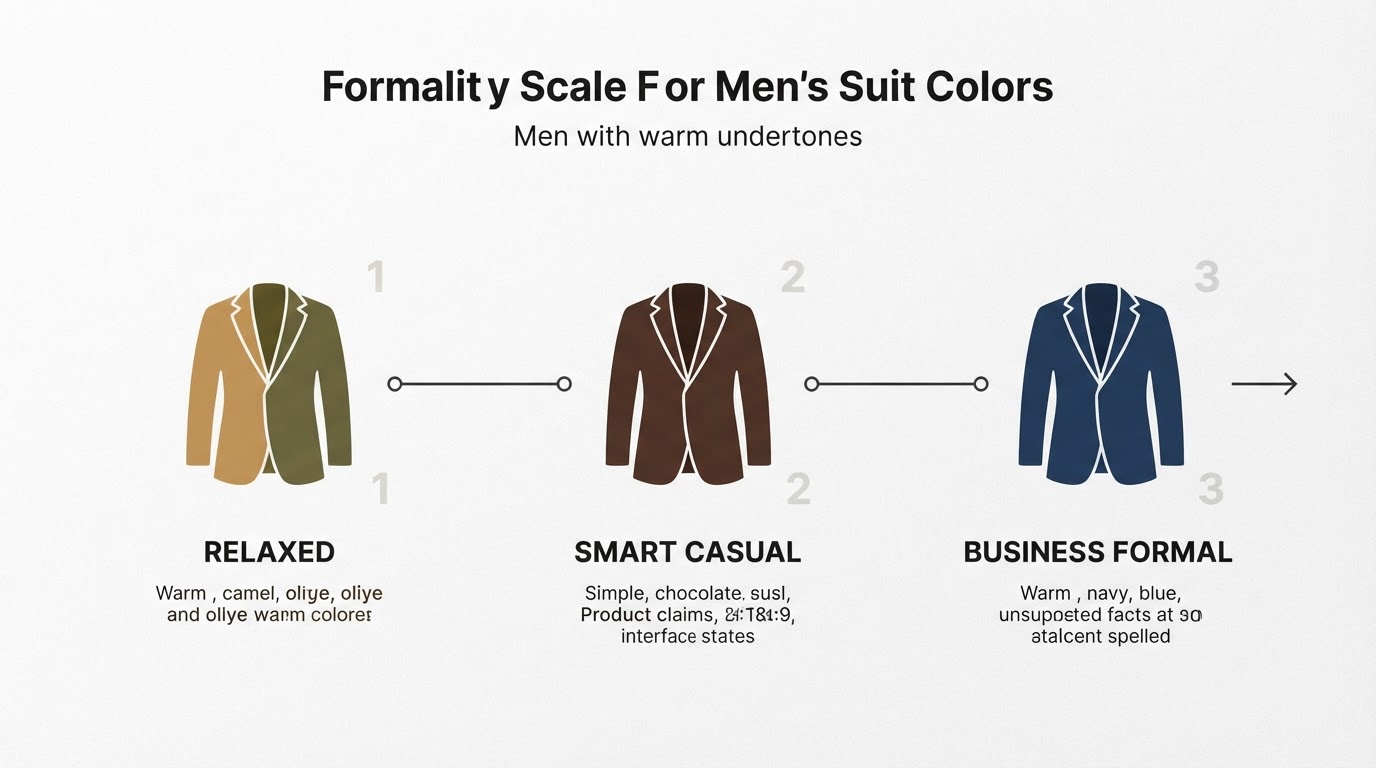
A quick way to place a color: imagine the suit in a room with dark wood and warm lighting. If it looks at home there, it will usually look at home on you.
How to Check Your Undertone Without a Consultant
You do not need an appointment to get a useful first read. Run these checks in daylight, with a bare face and a neutral shirt:
- Hold a pure white cloth and a cream cloth under your chin, one after the other. If cream evens out your skin and white makes it look grey or tired, you are likely warm.
- Compare gold and silver near your face. Warm undertones typically take gold more easily.
- Look at the veins on your inner wrist in natural light. Greenish lines point warm, bluish lines point cool, and a mix means the answer is less clear.
- Notice how your skin reacts, not which color you prefer. The test is about the reflection under your jaw.
- Repeat the checks on different days. One lighting condition can mislead you, while a consistent pattern across three or four checks is a more reliable signal.
These are the same variables a professional starts with. Undertone, value, and chroma are the three inputs, and season is only the label that comes out at the end.
Getting a Personal Verdict: Photo Analysis vs In-Person Draping
Once you know the six families, the remaining question is which two or three to buy. That is a personal question, and there are two practical ways to answer it: a photo-based color analysis or an in-person draping session.
This guide is published by the team behind Tone & Fit.
Tone & Fit is an iPhone app that starts from one selfie and returns a season verdict with a confidence score and a starting palette, and its men's color analysis section translates each of the 12 seasons into menswear: suits, shirts, ties, denim, outerwear, and beard color, with per-season pages written for men rather than relabeled from a women's guide.
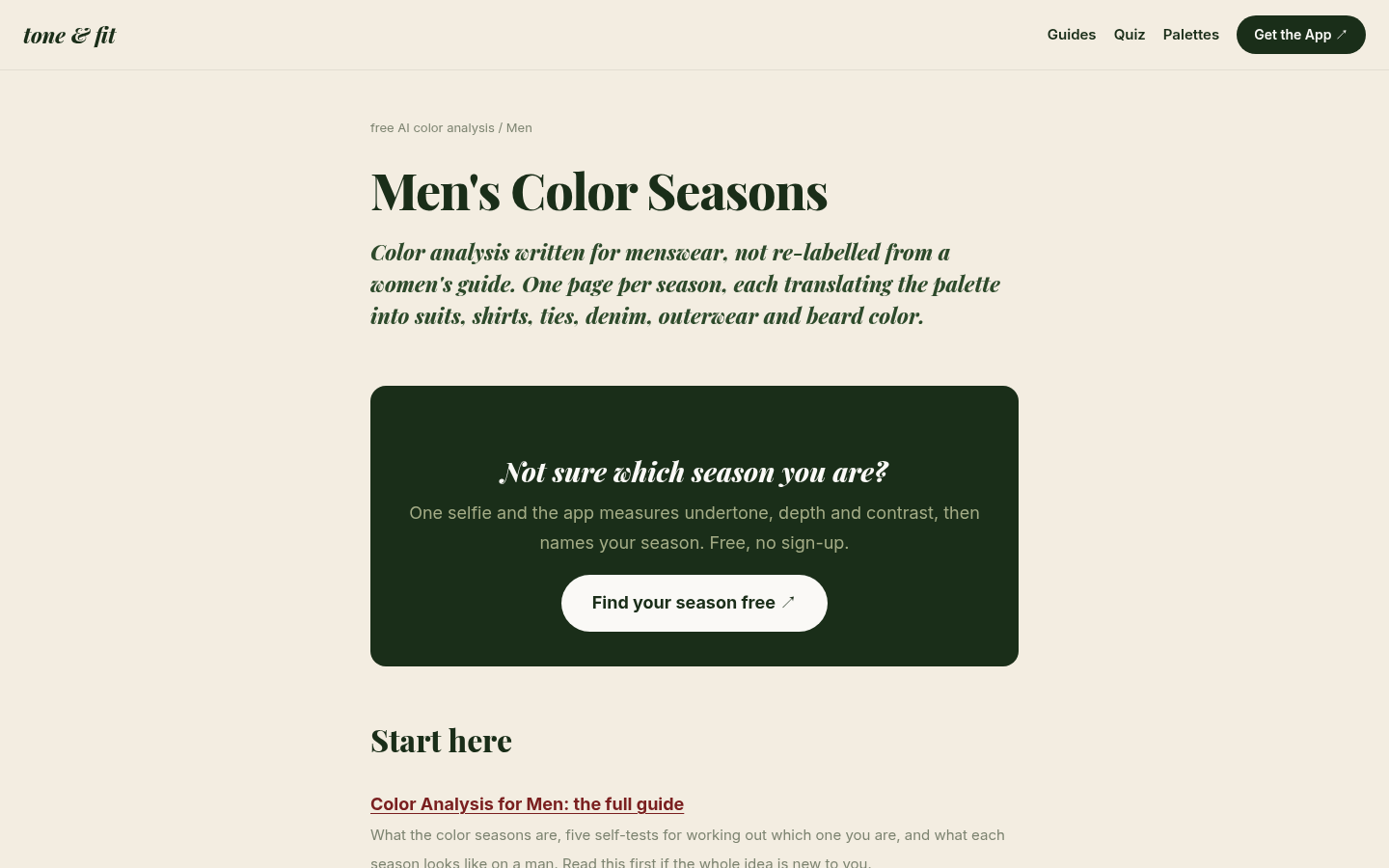
Desktop first-screen of the men's section page with menswear-specific color analysis guides and season-by-season article links
In-person draping remains the most thorough option because you see real fabric against your face in daylight and can compare shades side by side, and the trade-offs are scheduling, cost, and the fact that the read depends on the analyst you book.
Choose by scenario rather than by prestige. If you need one suit in the next month, a quick photo-based verdict is enough to shortlist colors before you walk into a store. If you are rebuilding a wardrobe over a season, a per-season reference is more useful because it carries suits, shirts, ties, and denim in one place. If a single high-stakes outfit has to be right, book the draping session and take your shortlist with you.
FAQ
What are the best suit colors for men with warm undertones?
Camel, chocolate brown, olive, warm navy, rust, and cream. Start with chocolate or warm navy if you want one formal suit, and add camel or olive for daytime and casual wear.
Can men with warm undertones wear black suits?
Black is achromatic, so it does not fight warm skin the way an icy blue does, but it also does not flatter it the way chocolate or espresso does. If you already own a black suit, warm it up with a cream shirt, a gold or bronze tie, and brown shoes.
Is navy warm or cool?
Navy can be either. The version with a green or teal cast is warm, and the version with a purple or grey cast is cool. Compare two jackets side by side in daylight, because the difference is usually obvious once you know to look for it.
How do I know if I have warm undertones?
Check in daylight with a bare face. Cream that flatters more than pure white, gold that flatters more than silver, and greenish rather than bluish wrist veins all point warm. No single test settles it, so look for a consistent pattern.
Does beard color change which suit colors work?
A warm beard adds gold or red near your face, which reinforces a warm palette and gives you more contrast to work with. If you color your beard, keep it in a warm brown or auburn range rather than an ashy or blue-black tone.
Are warm suit colors less formal?
It depends on the depth, not the temperature. Camel, sand, olive, and cream read casual to semi-formal, while chocolate, espresso, and warm navy are formal enough for business and evening. Rust is a statement color and works best on one piece.
The Takeaway
Start with the pieces nearest your face. A cream shirt, a warm tie, and a chocolate or warm navy jacket will do more for a warm undertone than any single statement suit. Once those are in place, a camel or olive jacket adds range, and rust stays a deliberate accent. If you want certainty before you spend, get a personal read and test it against the checks above, because the palette only helps when it matches the face wearing it.