Golden, Honey, Peach, and Warm Beige Are the Families to Test First
Warm undertones carry a yellow, golden, or peachy cast, so the closest foundation usually comes from a shade family with the same cast.
Golden, honey, peach, and warm beige are the four families to start with, and they are not interchangeable. Golden leans yellow and stays bright. Honey sits slightly deeper and browner. Peach leans orange-pink while staying warm. Warm beige is the muted option that keeps a warm shade from reading too bright. At deeper depths, the equivalent names usually shift to warm caramel, chestnut, or bronze rather than the lighter four.
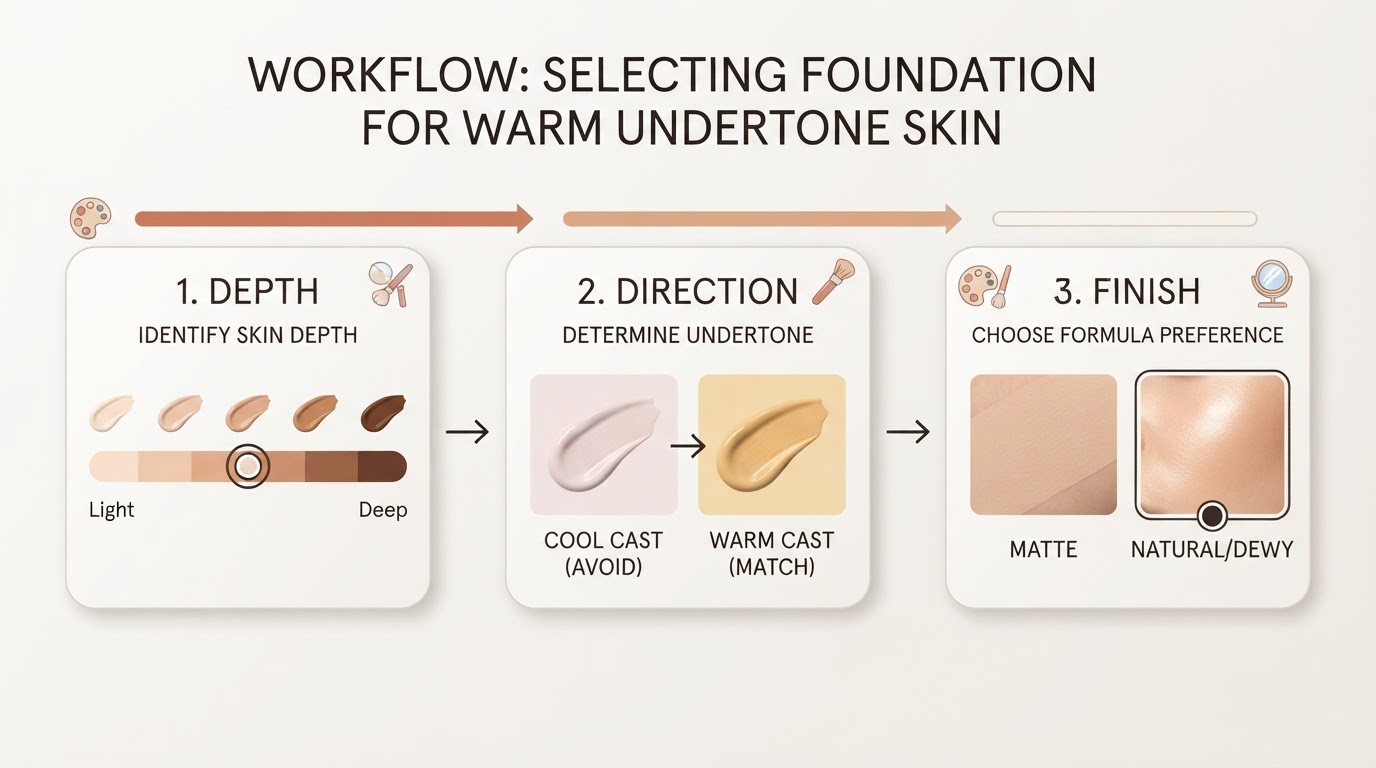
Depth matters as much as undertone, and it is where most warm matches fail. A golden shade two steps too light looks chalky at the hairline, while a warm shade two steps too deep turns muddy or orange. The practical order is depth first, then direction. Find two or three shades near your depth, then choose the one whose cast leans golden rather than pink.
What the shade leans toward | Undertone direction | Who it usually fits |
|---|---|---|
Golden, yellow, warm sand | Yellow-forward warm | Light to medium warm undertones |
Honey, warm beige | Muted warm | Medium warm undertones that dislike bright shades |
Peach, warm rose-beige | Warm with a pink-orange lean | Warm undertones who find yellow shades flat |
Caramel, chestnut, bronze | Deep warm | Medium-deep to deep warm undertones |
Key Answers at a Glance
- Best families to start with: golden, honey, peach, and warm beige, matched at your depth.
- Fastest test: three stripes along the jawline in indirect daylight, judged after ten to fifteen minutes.
- If a warm shade turns orange: it is usually too deep or too saturated, not the wrong undertone direction.
- Oily skin: keep the same shade logic and change the finish, because oil affects how foundation wears rather than which undertone matches.
- Neutral undertones: test a neutral shade beside a neutral-warm one at the same depth.
- Shade names: treat words like golden and honey as hints, because the same word can mean different depths across lines.
- The goal: a shade that disappears into your jawline instead of leaving a visible edge.
Test Along the Jawline in Daylight, Not in Store Light
A warm match is the shade you stop seeing once it settles, and the jawline in daylight is where that becomes obvious.
Start with bare skin, no makeup, and your hair pulled back. Draw three stripes along your jawline and let them sit for ten to fifteen minutes. Put your closest guess in the middle, a half-step lighter shade above it, and a warmer or deeper shade below it so depth and cast are both on display.
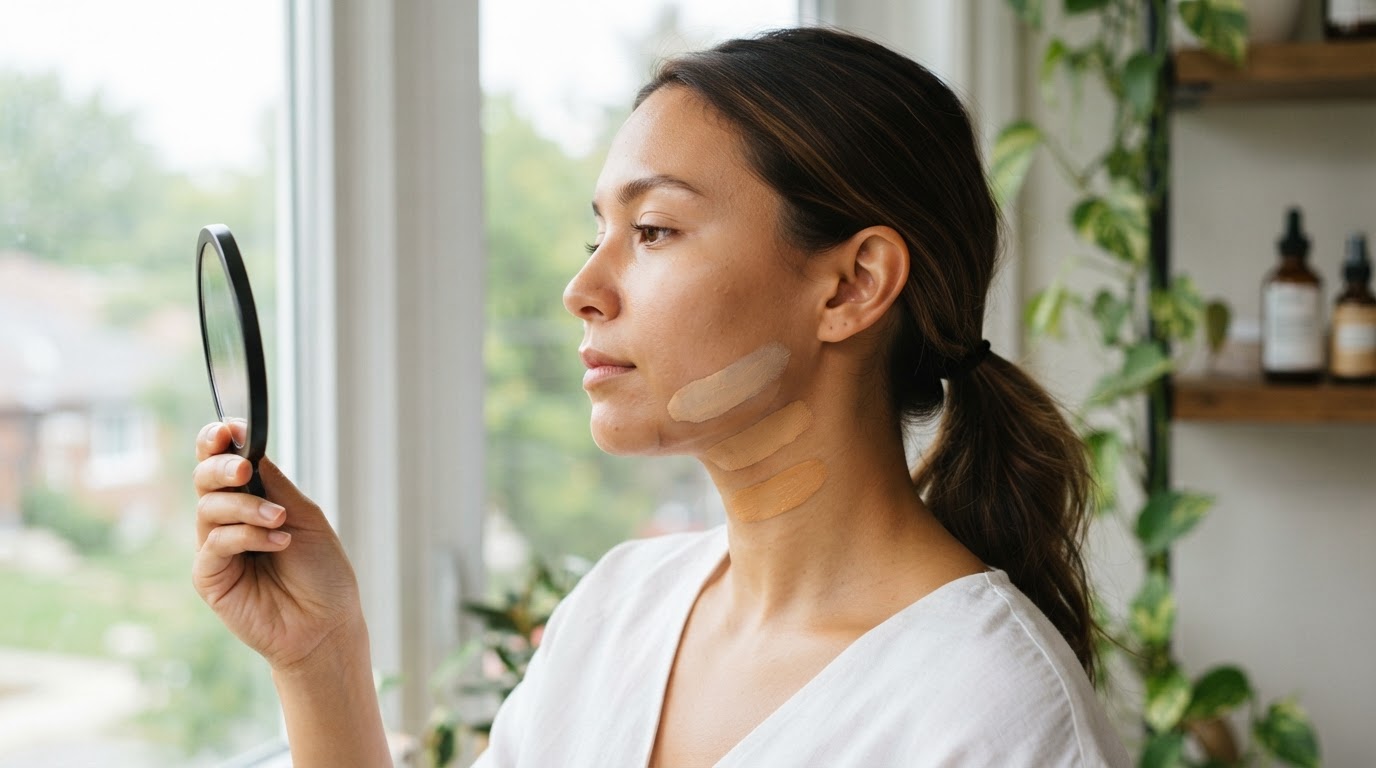
Then read the edges. The right shade fades into the jawline, a shade that is too light leaves a pale line, and a shade that is too deep leaves a darker one. Cool pink shades often turn gray or ashy on warm skin, while a warm shade that is too saturated turns orange against the neck.
Judge nothing in the first minute, because foundation shifts as it dries and mixes with your skin's oil. A shade that looks right on contact can warm up or darken by the ten-minute mark. Store lighting adds a second problem: warm bulbs in a beauty aisle push every tester toward yellow, so a shade chosen only under those lights can look different the moment you step outside.
Check the neck alongside the jaw. Faces and necks are often different depths, and a foundation that matches the jaw but fights the neck still reads as a mask in photos. If your skin is oily, test the exact finish you plan to buy rather than a tester from a different formula.
Why a Warm Shade Can Still Look Orange
A warm foundation goes orange when the depth or the saturation is wrong, not because warm is the wrong direction.
Three problems cause it. The shade is too deep, so the warm pigment reads as rust against lighter skin. The shade is too saturated, so a bright peach or tangerine overtakes your own color. Or the formula oxidizes, warming and darkening by a visible step within the first half hour.
The correction is smaller than switching sides. Step one shade lighter, or move from a peach-leaning warm to a golden or warm-beige shade at the same depth, and test again in daylight. Swapping to a pink or cool-beige foundation usually trades an orange cast for a gray one rather than fixing the match.
If a shade turns orange only after a few hours, the wear is the issue rather than the match. Oil, sweat, and face powder all shift foundation color, so check the same shade on clean skin at the two-hour mark before you decide it is wrong.
Warm Undertones and Oily Skin
Oily skin does not change your undertone, so settle the shade first and the finish second.
Once the warm match is right, choose a formula for the way your skin behaves across the day. Long-wear and matte-leaning finishes control shine, while hydrating formulas keep a natural finish and can look lighter on the skin. The same shade can pull in different directions depending on the finish, so test the one you actually plan to wear.
Then plan for the shift. Foundation tends to break up and darken over oily areas first, which can make a warm shade read deeper by the afternoon. Set only where you shine, and recheck the match at two hours on a normal day rather than ten minutes after application.
Neutral, Warm, and Everything In Between
If neither golden nor pink clearly wins at your jawline, you are probably neutral, and the useful move is a half-step rather than a full switch.
Neutral undertones sit between warm and cool. A neutral-warm shade adds a small amount of yellow or peach without going fully golden, which is often enough to stop a foundation from looking flat or ashy. Test one neutral and one neutral-warm at the same depth, then keep the one that leaves less of an edge against your neck.
Olive undertones are a separate case. If your skin carries a green or gray cast and both golden and pink foundations look slightly off, the shade may need a drop of green or blue mixer rather than a different depth. That is a bigger change than most people need, so confirm the direction with a second comparison before buying anything to mix.
Use a Season Verdict to Narrow the Test, Then Verify in Person
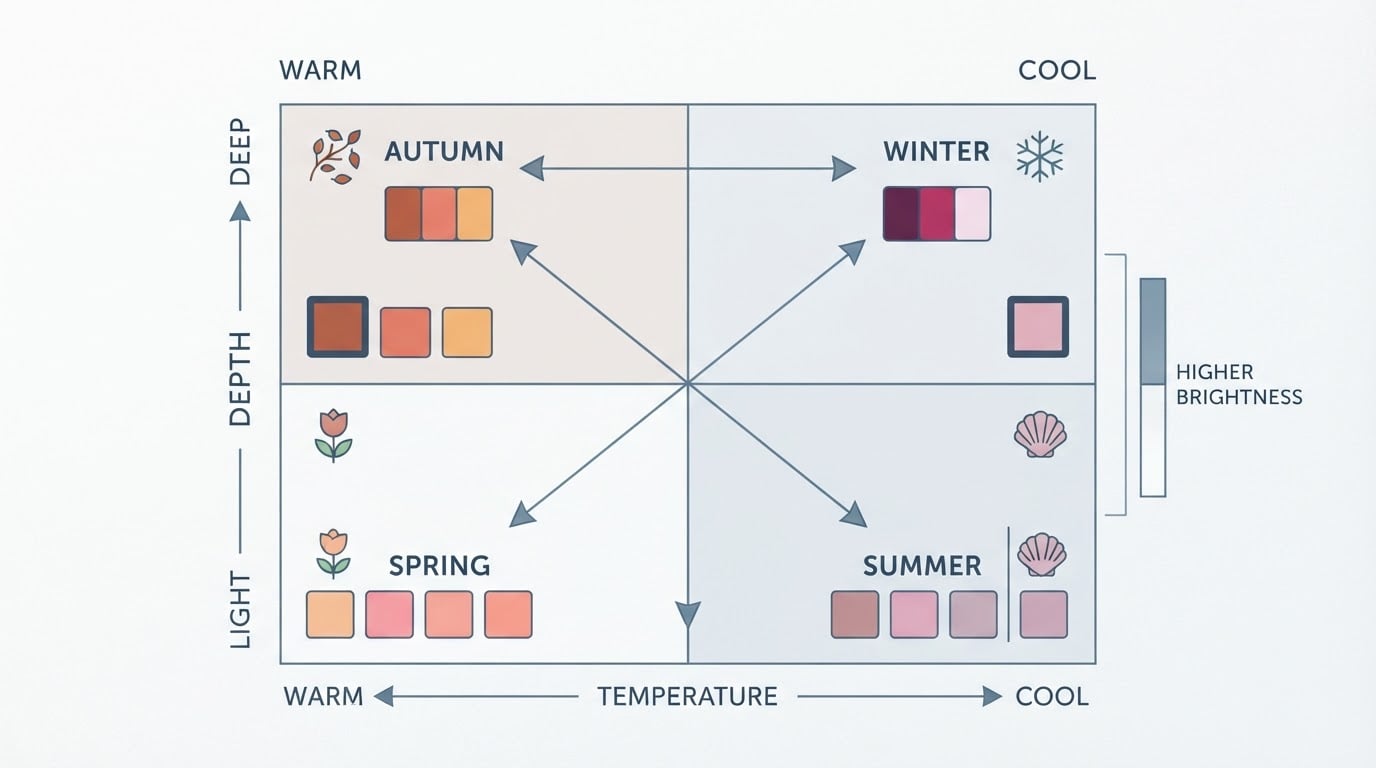
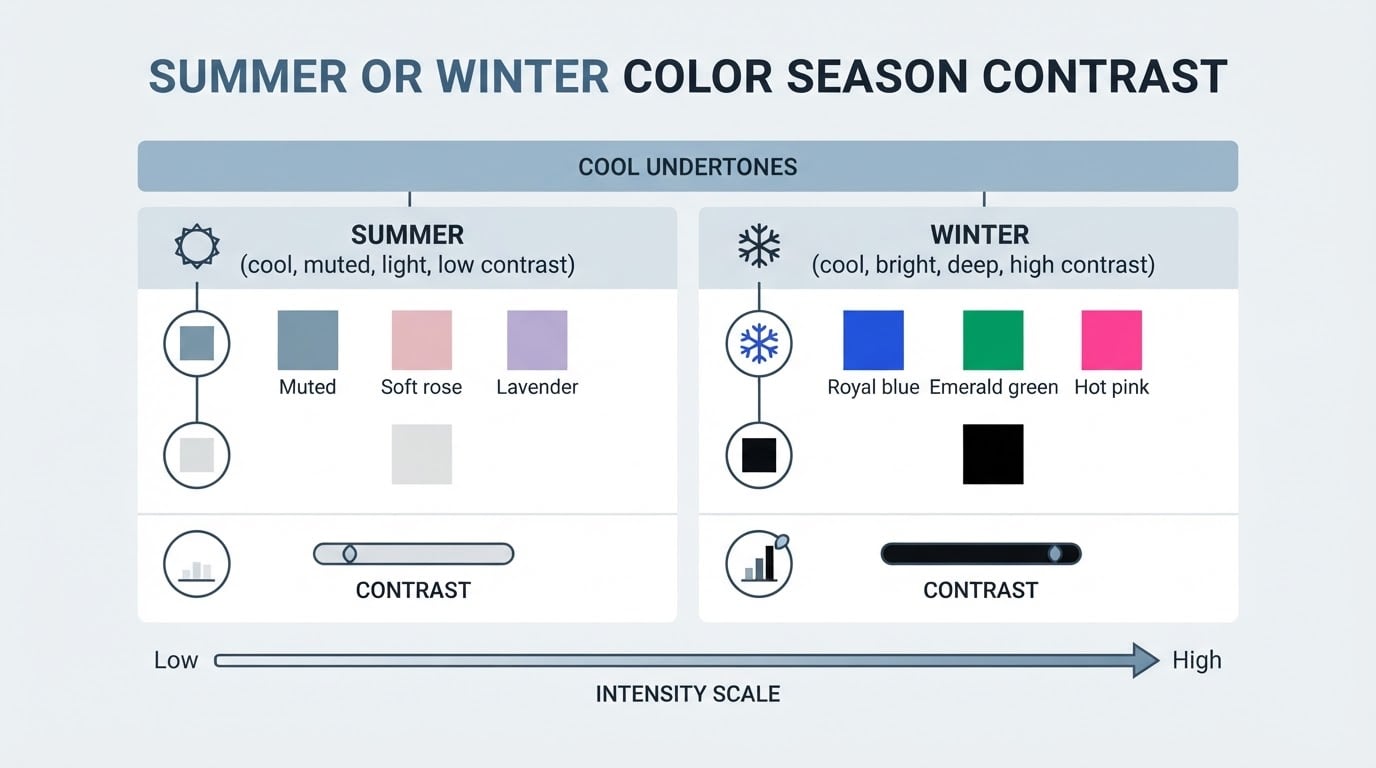
A color-analysis verdict does not choose your foundation, but it can cut a wall of bottles down to two or three shades worth testing.
There are two practical routes to that direction. A professional draping consultation holds fabric against your bare face under controlled light and reads which tones flatter you, which is still the strongest option for a high-stakes decision such as wedding makeup, though it costs more time and money than a photo read.
This guide is published by the team behind Tone & Fit.
Tone & Fit's free browser analyzer reads undertone from one image and returns a season verdict with a confidence score plus starter colors, and it flags warm indoor bulbs when they may be skewing the reading. For foundation shopping, the useful output is direction and depth, golden versus peach and light versus deep, which you still confirm with a jawline test before you buy.

Desktop first-screen of the free web-based color analysis tool with photo upload drop zone, how-it-works steps, and privacy notes
Common Questions About Warm Undertone Foundation
What is the best foundation shade for warm undertone skin?
Golden, honey, peach, and warm beige are the fastest families to test, always matched to your depth first. If those read too yellow, a warm beige or neutral-warm shade one step softer is the next place to look.
How do I read shade names when every line uses different words?
Treat the name as a hint and the swatch as the answer. Words such as golden, honey, warm beige, and caramel turn up across lines, but the same word can describe a different depth from one product to the next, and letter codes are not standardized. Some warm-labeled shades lean red or orange rather than yellow, which is why a shade can sound right and still look wrong. Compare the color at your jawline before you trust the label.
What foundation shade works for warm undertones and oily skin?
The shade logic stays the same. Oily skin changes how a formula wears, not which undertone direction matches, so set the shade with a jawline test and then pick a finish that handles shine. Recheck after a couple of hours, because oil can deepen the color as the day goes on.
What if I have a neutral undertone?
Start with a neutral shade at your depth and a neutral-warm shade beside it. If warm shades pull yellow and cool shades pull pink, neutral is your center, and a neutral-warm option is the one to reach for when you want a slightly warmer finish.