What the Best Hair Color for Warm Undertone Skin Has in Common
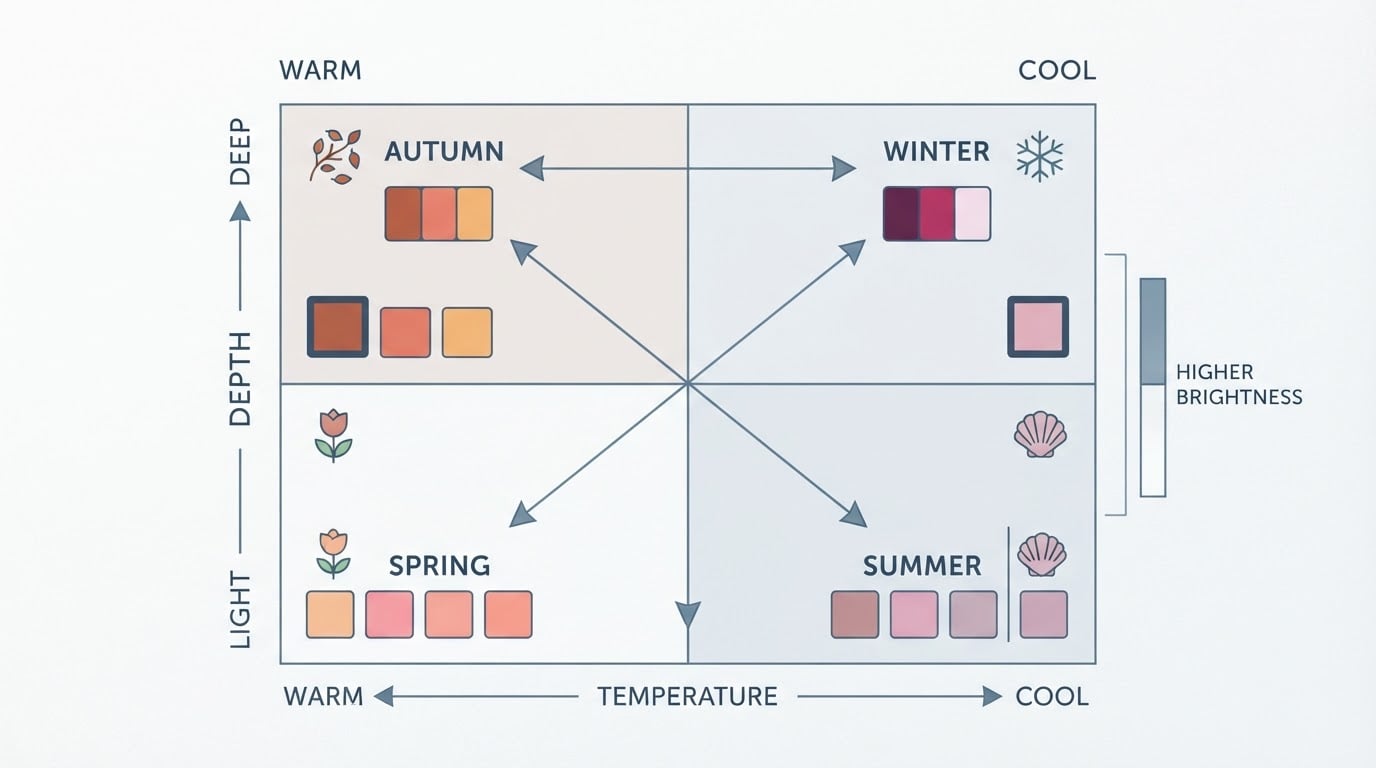
Warm undertone means the base cast of your skin leans golden, peachy, or yellow rather than pink, blue, or gray. The shades that flatter it share that same base: gold, copper, amber, and red-orange pigment. When a color carries the same underlying warmth as your skin, it keeps light bouncing off your face instead of canceling it out.
That is why "best" is never one shade. Two people with the same warm undertone can wear the same formula completely differently when their natural depth or contrast differs. A light golden blonde and a deep chestnut brown can both be right answers to the same search.
Quick answers before the detail:
- Light warm skin with light natural hair: golden, honey, and strawberry-leaning blondes.
- Warm skin with dark natural hair: caramel, chestnut, copper-brown, and warm espresso.
- Want maximum warmth: copper, auburn, and warm red.
- Usually worth skipping: ash blonde, ash brown, cool platinum, blue-black, and violet-based red.
Color names are marketing; color families are chemistry. "Honey" on one salon's chart is "gold" on another, and a shade called "warm brown" can still be built on an ash base. Learn the family and the depth, then describe both to your colorist.
The Warm Shade Families Worth Shortlisting
Golden
Golden shades carry yellow-gold pigment and sit closest to a natural warm undertone. Golden blonde, honey blonde, golden brown, and butterscotch keep the contrast between skin and hair gentle, which suits people whose natural coloring has little drama in it.
Honey and amber
Honey, caramel, amber, and toffee add glow at medium depth. This family is often the easiest warm choice to live with because it blends a little darker than golden without flipping into full red. It also grows out kindly when the roots stay close to your natural level.
Copper and warm red
Copper, auburn, strawberry, paprika, and warm mahogany are the most saturated warm shades. They read as a deliberate statement, and they ask for the most upkeep because red tones fade first. If you want red, plan on glossing between appointments.
Warm brunette and warm dark
Chestnut, warm chocolate, cinnamon brown, and mocha bring depth without turning cool. For very dark hair, warm espresso and soft black built on a brown base keep the color rich instead of flat. This is the lowest-maintenance warm family because regrowth is less obvious.
Family | What you will hear at the salon | What it does for warm skin |
|---|---|---|
Golden | golden blonde, honey blonde, butterscotch, golden brown | Pushes warm light through the hair, gentle contrast |
Honey and amber | honey, caramel, amber, toffee | Adds glow at medium depth, easy to maintain |
Copper and red | copper, auburn, strawberry, paprika, warm mahogany | Strongest warmth, biggest statement, fastest fade |
Warm brunette | chestnut, warm chocolate, cinnamon, mocha | Depth on a warm base, forgiving regrowth |
Warm dark | warm espresso, soft black with a brown base | Keeps very dark hair rich rather than flat |
Depth and Contrast Decide the Shade
Match depth to depth
Depth is how light or dark the color is. Staying within one or two levels of your natural depth is the difference between a shade that looks like it belongs to you and a shade that looks pasted on. If your natural hair is light brown, honey blonde or caramel sits closer to a believable shift than platinum or jet black.
Match contrast to contrast
Contrast is the relationship between your skin, your natural hair, and your eyes. A high-contrast face, light skin next to dark brows and dark eyes, can carry a stronger copper or a deeper warm brunette. Lower contrast, where hair, skin, and eyes sit in a similar range, usually looks best in honey, golden, or soft caramel.
Keep the family consistent
Your hair color should agree with the warm colors you already wear. If your wardrobe and makeup run on cream, camel, gold, and warm red, a warm hair family extends that. If you are refreshing your wardrobe at the same time as your hair, decide both from the same family and skip the guesswork.
Ashy Tones That Fight Warmth
Ash describes a cool, blue or green-based pigment designed to cancel gold. On warm skin that cancellation does not just mute the hair; it can leave your face looking drained, sallow, or gray, and the color often reads flat as it grows out.
The usual culprits: ash blonde, ash brown, cool platinum, mushroom and taupe tones, blue-black, and reds built on violet or blue rather than orange.
What to ask for instead:
- Say the family word out loud: golden, honey, caramel, copper, chestnut.
- If you want something quieter, ask for warm beige or neutral-warm rather than ash.
- Ask your colorist to skip the blue or violet toner, or to run a warm gloss over hair that already went ash.
- Bring a reference photo taken in daylight from the family you want, and ask which level it is.
A Shortlist Routine to Run Before the Salon
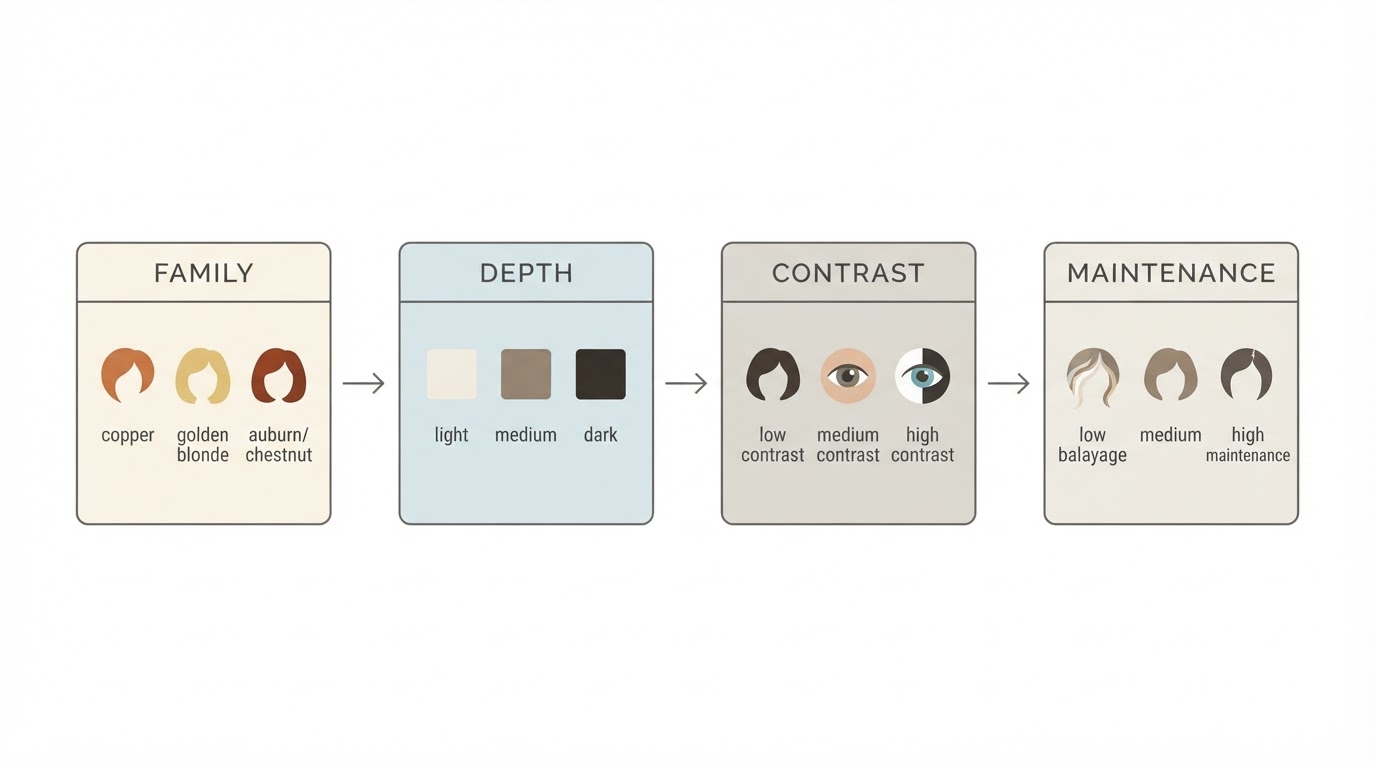
This is the part that saves appointments. Work through five filters in order, and stop as soon as the answer is describable.
- Choose the family. Golden, honey, copper, or warm brunette. One, not three.
- Set the depth. Stay within one or two levels of your natural color unless you are prepared for monthly roots.
- Set the contrast. Strong copper and deep brown flatter high-contrast faces; honey and soft caramel flatter lower contrast.
- Check the wardrobe. If the shade clashes with the colors you actually wear, it belongs in a mood board, not on your head.
- Decide the maintenance. A single-process warm brunette is low effort; copper and light blonde need glosses and root touch-ups.
You are ready to book when you can describe the shade in one sentence: family, depth, contrast, and how you will keep it. "Warm honey blonde one level up from my natural light brown, no ash, roots kept close" is a better brief than a screenshot alone.
Two habits make the appointment smoother. Bring two or three reference photos taken in daylight rather than one filtered shot from a trend feed, and ask for a strand test before a dramatic change. It is the cheapest way to see how a formula behaves on your own hair.
Where a Photo-Based Season Verdict Fits
Some people walk into the salon already knowing their warm lean. Others want a second opinion before they spend an afternoon and a salon budget. Three routes are worth weighing on the same criteria: how personal the input is, what the route costs you in time or money, and who supplies the judgment.
In-person draping with a certified consultant puts real fabric against your face in daylight and lets a trained eye adjust the comparison in the moment, which is hard to replicate at home; it costs an appointment and a fee, and the reading still depends on the consultant's judgment.
DIY draping at home costs nothing but time: you hold fabric, scarves, or color cards under your chin in indirect daylight and compare how your skin reacts, but you supply both the swatches and the judgment, so it works best for confirming a shortlist you already trust.

Published by the team behind Tone & Fit.
Tone & Fit takes the photo-based route: an iPhone app, listed on the App Store as AI Photo Skin Tone & Palette, built around a selfie-based 12-season analysis, with a free browser-based analysis on its site and a web library of all 12 sub-seasons as hex-coded swatches. Use it when you want a family-level starting point before you book, and treat the result as a first filter rather than the final word.

Desktop first-screen of the free web-based color analysis tool with photo upload drop zone, how-it-works steps, and privacy notes
Whichever route you choose, the decision still lands in the salon chair. Bring the shortlist, ask questions about maintenance, and let a strand test settle anything dramatic.
Choosing for Short Hair, Beards, and a Dark Base
Short hair and beards follow the same family logic with less room to hide. On a short crop, the base tone is most of what people see, so the family decision matters more than the placement of highlights. For a beard, keep the color within a shade or two of the hair on your head so the two read as one face rather than two unrelated colors.
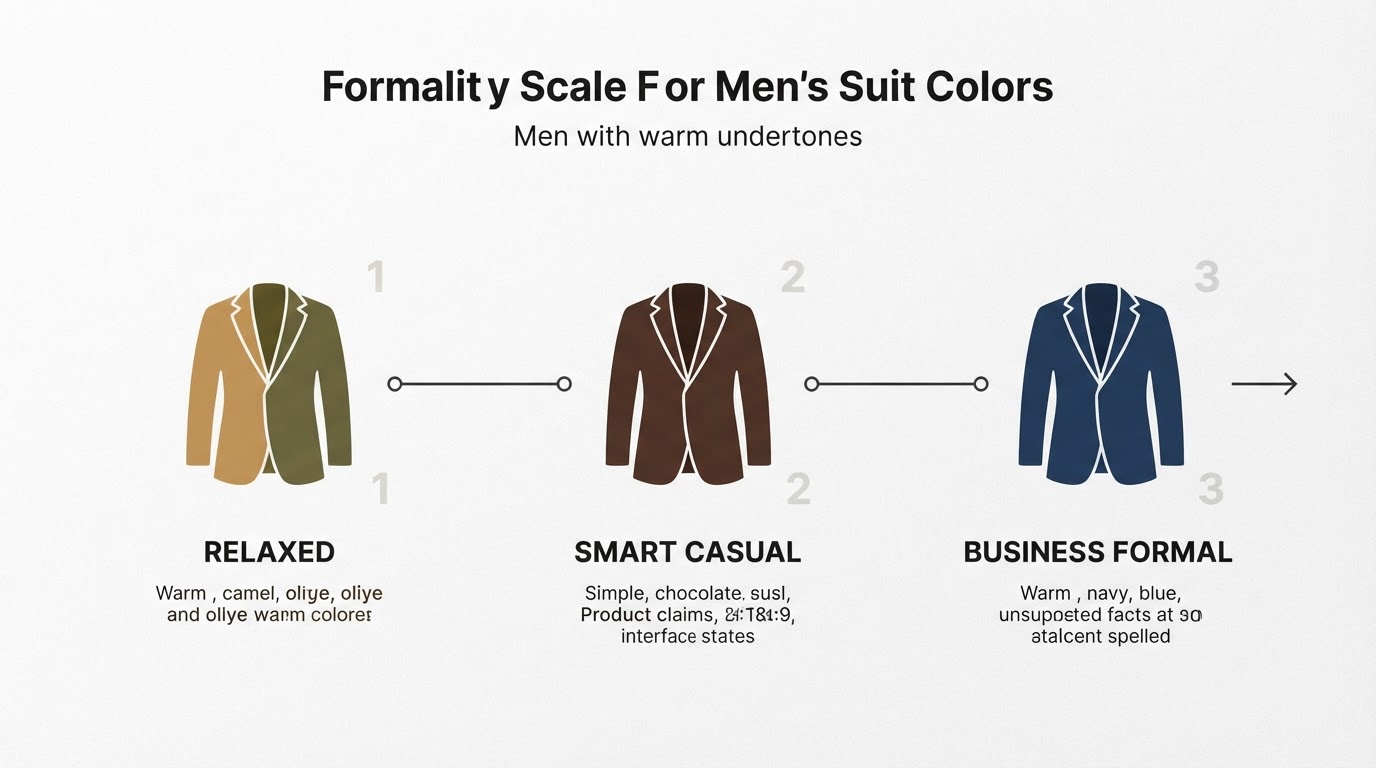
Warm chestnut, warm espresso, and warm auburn work for beards the same way they work for hair. Flat blue-black and ashy brown on a beard can read gray or muddy next to warm skin. If you are buying suits or shirts at the same time, run the same three filters, family, depth, and contrast, against the fabrics you actually wear, because menswear shows a clash faster than a full head of hair does.
FAQ
Is copper the only warm hair color?
No. Copper is the loudest warm family, but golden, honey, caramel, and warm chestnut are warm too. Many people with a warm undertone do better in honey or chestnut than in full red.
What if my natural hair is very dark?
You can still go warm. Warm espresso and soft black with a brown base keep the color rich, while caramel or chestnut highlights add visible warmth without lifting the whole head several levels.
How do I know my undertone is warm?
Look at how your skin responds to gold and silver, the base color of your natural hair, and how your skin reads in daylight photos. These clues are not a diagnosis. If the answer is not obvious, a draping session or a photo-based analysis gives you a clearer starting point than guessing.
Can I keep an ash shade if I like cool tones?
You can, but expect the tone to work against your skin instead of with it. If you want a softer version of warm, ask for warm beige or neutral-warm rather than ash, and keep the depth close to your natural level.
Do I need a color analysis before booking a salon appointment?
No. The five filters above are enough to walk in with a usable brief. A season analysis speeds up the family decision, and a strand test settles what is left.